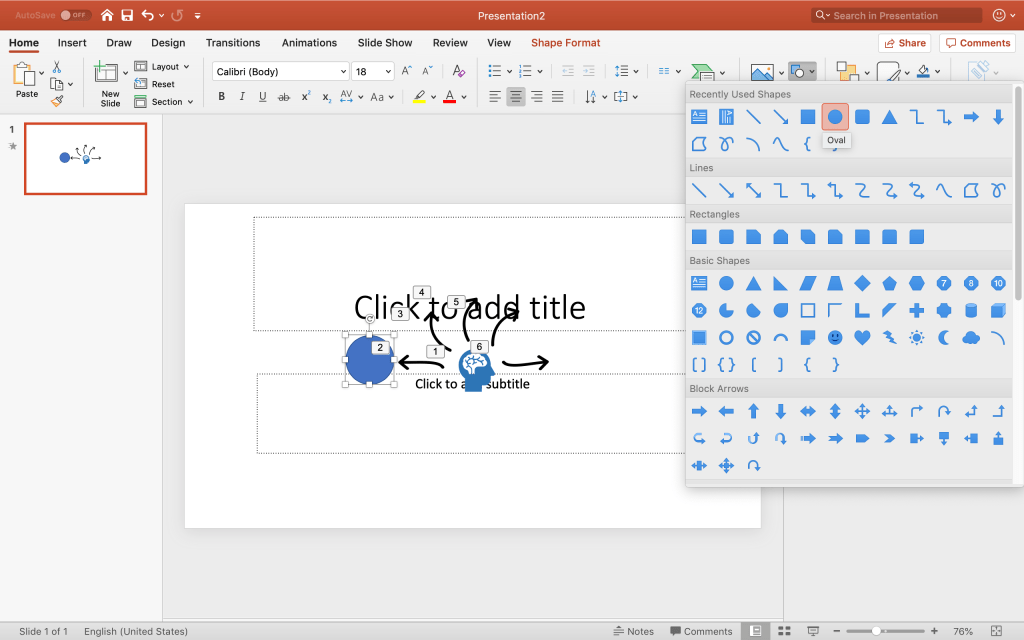
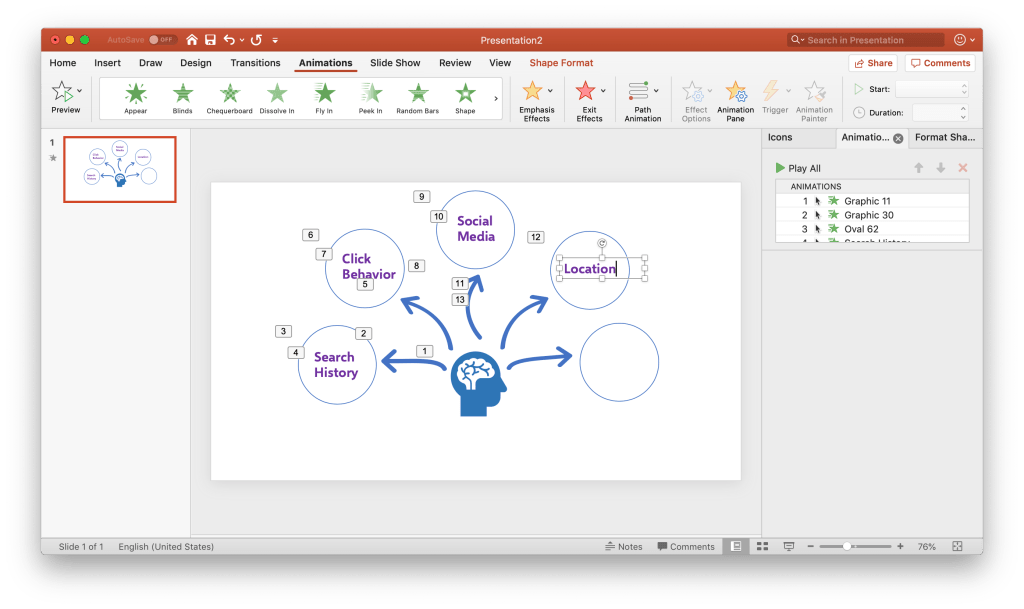
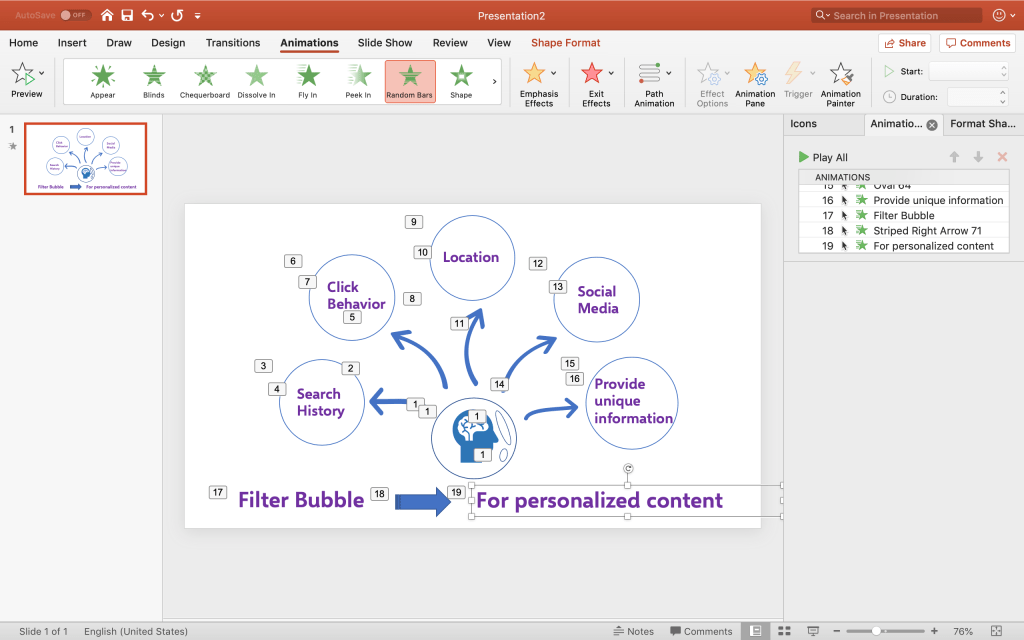
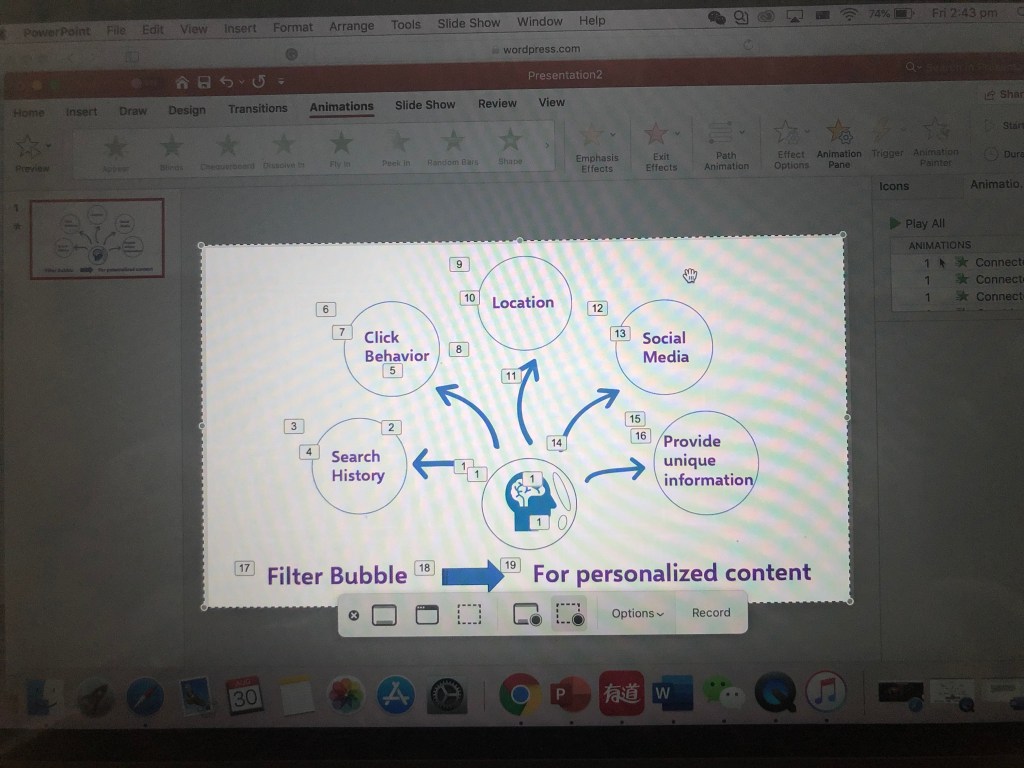
I made a video which presented the idea of filter bubble in the digital age. My video was edited through PowerPoint. Firstly, I started inserting a person icon with a bubble as the filter bubble icon and some arrows icon over and around the person icon on the slide (see figure 1). I also inserted some circles with white colour inside and put them around my filter bubble icon in order to add some text. Secondly, I adjusted the size of all icons and circles and changed the colour of those icons and the edge of all circles into blue to keep a same theme (see figure 2). Then, I typed some text inside those circles and at the bottom of the slide in order to present a better understanding. Thirdly, I added some motions for all icons and text through the ‘Animations’ button. I chose the ‘random bars’ effects and selected ‘1 second fast’ as the timing to make an animation (see figure 3). Finally, I use Quick Time Player to record the animation on my laptop and upload it on YouTube (see figure 4).
Filter Bubble is a theory which companies provide personalized content to users through algorithms analysis on users’ search histories, click behaviours, computer types and locations (Pariser 2011). We use social media to gain information, buy products, share experiences and so on. But at the same time, social media companies collect and analyse users’ usage records to provide unique information to each user. Companies filter the information which users are not interested in and come out the information that users want in order to achieve their business goals. Although these can help users save time on filter some information. Users cannot see the filtered information, that information may be what we need. Because of these, we always live in the filter bubble and cannot see the real world. Ćurković & Košec (2018) suggest that filter bubble should follow transparency and users have rights to choose what information they want, otherwise filter bubble will lead us to the world it already chosen for us. Therefore, we should get out from filter bubble and open our minds to other viewpoints.
References
Ćurković, M. & Košec, A. 2018, “Bubble effect: including internet search engines in systematic reviews introduces selection bias and impedes scientific reproducibility”, BMC Medical Research Methodology, vol. 18, no. 1, pp. 1-3.
Pariser, E. 2011,Beware online “filter bubbles”, TED video, YouTube, viewed 30 August 2019, <https://www.ted.com/talks/eli_pariser_beware_online_filter_bubbles#t-272667>.
 Vincy's blog