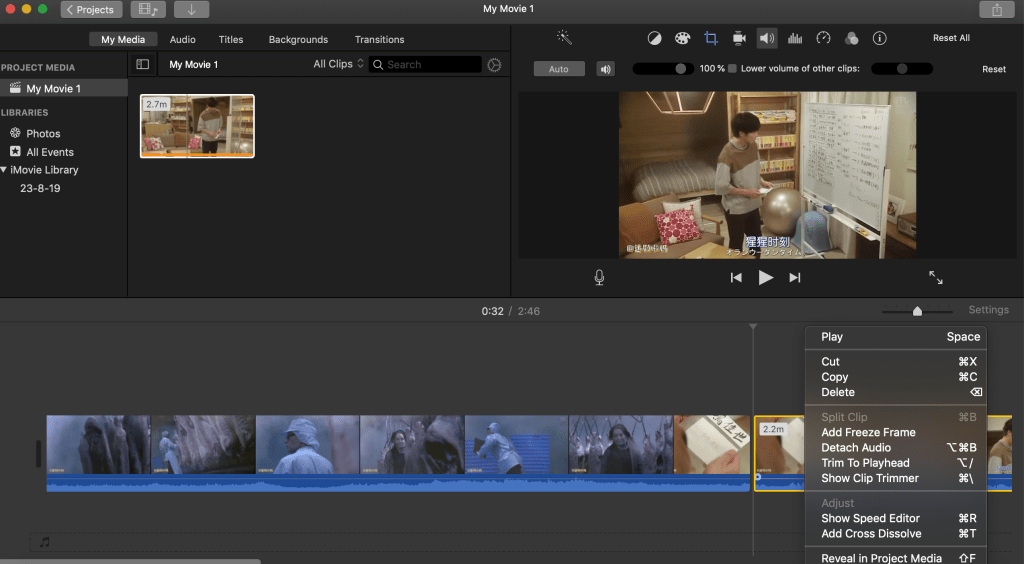
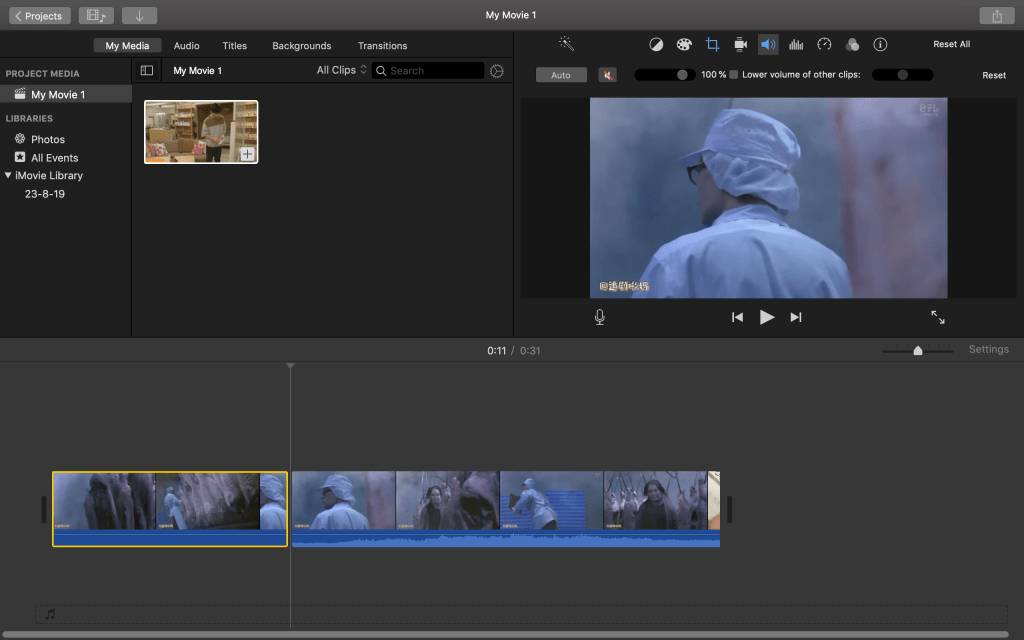
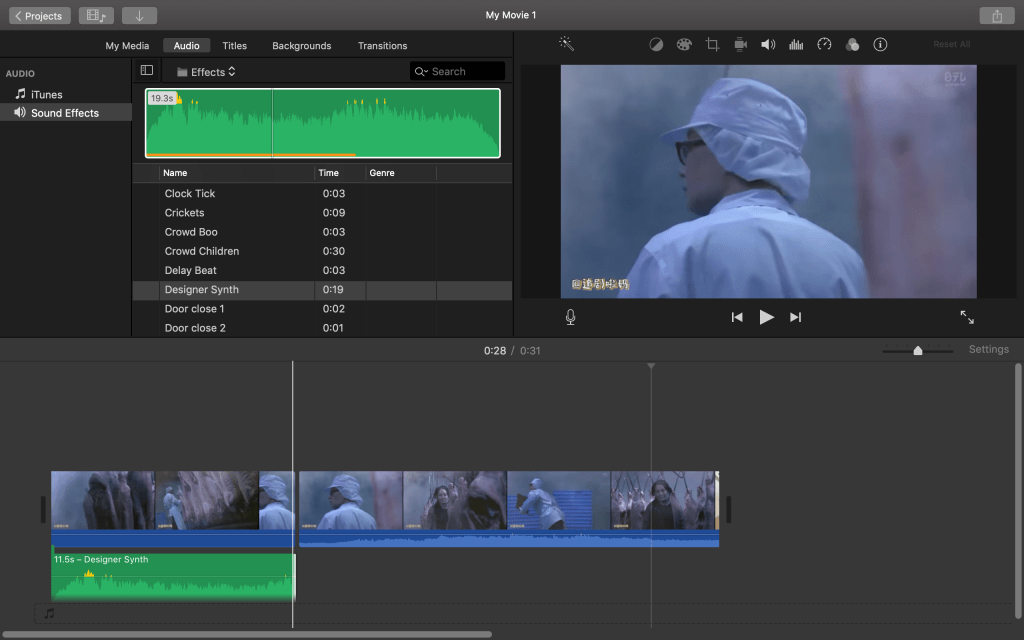
I edited a video which emphasised the multimodality effect in the digital age. Firstly, I chose a Japanese drama video which was called ‘Your Turn To Kill’ from Sina Weibo. Then, I download the video on my laptop and started editing it in iMovie. Secondly, I separated the video into two clips, then chose the scariest parts of the video and deleted the other clip (see figure 1). Thirdly, I muted the sound of the first part of video clip and kept the rest part in order to highlight the next terrifying scene in the video (see figure 2). Finally, I looked for a sound effect which presented a deep feeling and a sense of mystery to audiences in the audio of iMovie and added the audio into my video (see figure 3).
Multimodality refers to combine several different modes together, such as audio and visual text in order to present a better communication way to audiences. Multimodality is widely used in all kinds of fields in the digital age, because the effect of multimodality plays an important part in our lives. Ravelli and Leeuwen (2018) demonstrate that multimodality as a system and the effect of multimodality is a complementary interactional relationship to present a sense of reliability on communication and intensify audiences’ affective responses. For example, in a website, it integrates images, texts, sound and so on to provide a good user experience and improve user engagement in some ways. The video which I edited above is also a multimodality production. In the visual aspect, all scenes of the video integrate a gloomy filter to underline the frightening part. On the other hand, in the auditory aspect, the background music at the beginning clip and the one at the back are quite different. The pitch of the first music is low and bland, however the last music is some horror groan sound and combine with the character screaming to make a contrast between the first and last scene. In these ways, the effect of the multimodality can better present the frightening scene to audiences, it also affects audiences’ mind and bodies to respond. Hardt (2007) reveals that multimodality affect is not only bout how we think, but also about the process how we experience and embody it. Multimodality is the way that we communicate and it affects our bodies and minds and requires us to consider the reasons and emotions.
References
Hardt, M. 2007, ‘The Affective Turn: Theorizing the Social – Foreword: What affects are good for’, Duke University Press, pp. ix-xiii.
Ravelli, L. J. & Van Leeuwen, T. 2018, ‘Modality in the digital age’, Visual Communication,vol. 17, no. 3, pp. 277-279.
Zhuijulama 2019, Your Turn To Kill,video recording, Sina Weibo, viewed 11 September 2019, <http://t.cn/AiY340Tg>.
 Vincy's blog